

China Holds Benchmark Lending Rates Unchanged for 13th Consecutive Month as Two-Speed Economy and Iran Deal Relief Complicate Policy
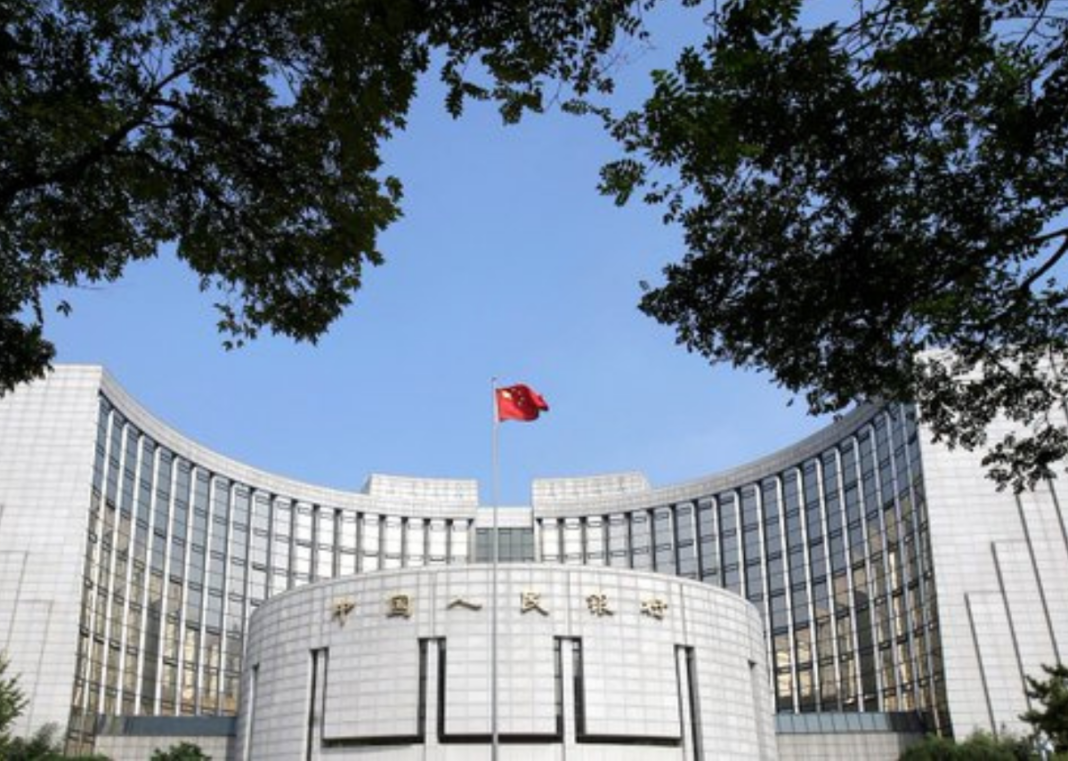
The People’s Bank of China left its benchmark lending rates unchanged on Monday, June 22, for the 13th consecutive month, as policymakers balance a resilient export-driven manufacturing sector against deepening weakness in domestic demand, a multi-year property downturn, and the shifting outlook for oil prices following the US-Iran memorandum of understanding signed last week. The one-year loan prime rate — the benchmark for most corporate and household borrowing — was held at 3.00%, while the five-year LPR, used as a reference rate for mortgage lending, remained at 3.50%. All 30 market participants in a Reuters survey conducted last week predicted no change to either rate.
The decision extends a period of rate stability dating to May 2025, the longest consecutive hold since the current LPR system was established in 2019.
A Divided Economy
The decision reflects the difficulty facing Chinese policymakers as the economy sends sharply contradictory signals. Factory output has been buoyed by surprisingly resilient exports, while domestic demand has continued to weaken. China’s retail sales fell in May for the first time in more than three years. Investment slumped. Industrial output, by contrast, accelerated.
“Despite the imbalance between robust factory supply and deteriorating domestic demand, Beijing is showing patience,” said Henry Hao, Senior China Economist at Commerzbank.
The property sector remains a persistent drag. China’s new bank lending rose less than expected in May after contracting the previous month, as the prolonged property downturn continued to weigh on household borrowing. The steady rate signal, Reuters reported, reflects that authorities are in no rush to ease policy and show little concern about slowing credit growth at this stage.
Pan Gongsheng Reframes Slower Lending as a Feature, Not a Bug
PBOC Governor Pan Gongsheng addressed the structural dimension of the slowdown at the annual Lujiazui Forum in Shanghai last week, telling attendees that loan growth has slowed in recent years even as bond and equity financing have gained traction. He described the shift as evidence of “profound economic restructuring” and the emergence of new growth engines.
“It’s difficult and unnecessary for China’s credit growth to maintain its previous pace,” Pan said. His comments represented a notable reframing: where slower credit growth might previously have been presented as a problem requiring a policy response, the PBOC is now presenting it as a structural feature of a maturing and reorienting economy.
At the same forum, Pan announced that six major state-owned banks — including Bank of China and China Construction Bank — have been authorised to conduct offshore yuan transactions in Shanghai’s free trade zone. The PBOC also created a new facility called the FIMA RMB Repo, designed to allow overseas central banks and sovereign wealth funds to obtain yuan liquidity more easily by using top-rated Chinese bonds as collateral.
The Demand Problem the Rates Cannot Fix
Analysts at Citi said the PBOC’s adjustments to its overnight repo operations announced at the Lujiazui Forum — aimed at improving short-term liquidity management — do not constitute outright easing. Citi said it still expects a symbolic 10 basis-point rate cut in the second half of 2026, with risks skewed to earlier, citing weak domestic demand as the primary driver.
Jing Sima, Chief Strategist at BCA Research, framed the central bank’s dilemma plainly. “The primary challenge facing China is not a lack of liquidity but insufficient demand for credit,” Sima said. He expects fiscal support to play a larger role in boosting growth while the PBOC remains accommodative without implementing outright interest rate cuts.
Marco Sun, Chief Financial Market Analyst at MUFG China, said the PBOC’s role in the economy is evolving. “In the past, the PBOC functioned more as the ‘central bank of the banking system,'” Sun said. “In the future, the central bank cannot limit itself to managing the banking system; it must also more directly manage market liquidity, the cost of capital, and financial market stability.”
The Iran Deal’s Impact on the Rate Calculus
The US-Iran memorandum of understanding, signed on June 18, introduced a new variable into China’s policy calculus. The deal initially caused oil prices to fall, which, if sustained, would ease one of the most persistent headwinds facing China’s manufacturing-heavy economy. China accounts for a dominant share of global oil demand and imports the bulk of its crude through the Strait of Hormuz.
However, Iran’s declaration on Saturday, June 20, that it had again closed the Strait of Hormuz following continued Israeli strikes in Lebanon reintroduced uncertainty. US Central Command reported that commercial traffic continued transiting the strait on Saturday regardless of the closure announcement, but market anxiety over the waterway’s status has kept oil prices volatile — adding to the difficulty of projecting whether the inflation and cost pressures that have kept the PBOC from cutting rates will ease or persist in the months ahead.
“The government may also need time to assess the impact of external uncertainties amid the Middle East conflict,” said Yu Song, Chief China Economist at UBS Securities.
Financial Stability Concerns at the Lujiazui Forum
Ding Xiangqun, the newly appointed head of China’s National Financial Regulatory Administration, used the Lujiazui Forum to warn that cross-border and cross-market transmission of financial risks had become “increasingly pronounced” in recent years. He said regulators would guide financial resources toward emerging and future industries, step up regulatory cooperation in fast-evolving sectors, crack down on disorderly competition, and encourage financial institutions to raise capital through multiple channels to strengthen their risk resilience.
China’s economy is witnessing increasing imbalance, Ding said, with consumption weak and the property sector struggling, while investment in robotics and artificial intelligence remains active. Regulators will use fiscal and regulatory tools rather than broad interest rate movements to channel resources toward the sectors driving the economy’s restructuring, he indicated.
Background
China last changed its loan prime rates in May 2025, when the PBOC cut both the one-year and five-year LPRs by 10 basis points each, reducing them to their current record lows of 3.00% and 3.50% respectively. At that point, Chinese policymakers were responding to a deepening deflationary environment and slowing growth momentum. By the start of 2026, China’s economy had accelerated to 5% growth in the first quarter — the top end of Beijing’s full-year target range of 4.5% to 5%, its least ambitious annual target since the 1990s — while factory-gate prices rose for the first time in more than three years, reducing the urgency for further cuts. The outbreak of the Iran war in late February 2026 then introduced a new energy-price and global demand shock that complicated the rate outlook further.
What Happens Next
Citi analysts expect the PBOC to deliver a symbolic 10 basis-point rate cut in the second half of 2026, with the timing dependent on whether domestic demand deteriorates further or whether the Iran ceasefire’s effect on oil prices provides sufficient relief to stabilise the inflation picture. BCA Research’s Sima said fiscal support, rather than monetary easing, is expected to bear the primary burden of supporting growth through the remainder of the year. Whether the Strait of Hormuz remains practically open — despite Iran’s closure declaration — and whether the 60-day US-Iran negotiating window produces a durable settlement will be among the most consequential variables for China’s monetary policy decisions in the months ahead.