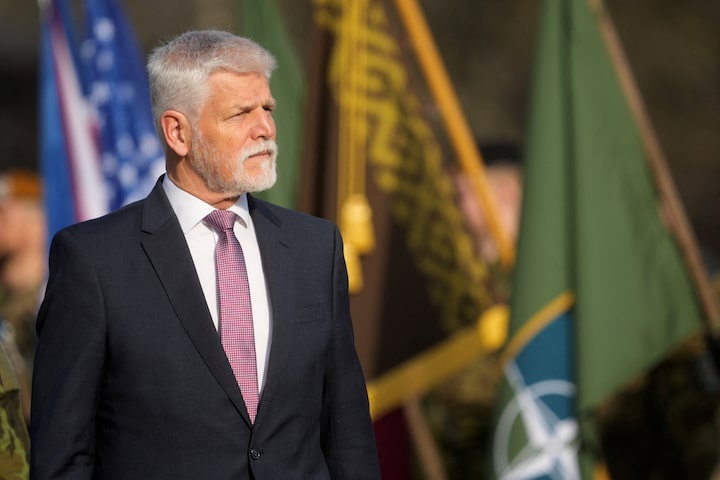

PRAGUE — The Czech Constitutional Court ruled on Wednesday that Prime Minister Andrej Babiš’s government must include President Petr Pavel in the country’s official delegation to next month’s NATO summit in Ankara. The court ordered the cabinet to arrange transportation and secure accreditation for Pavel and his staff, according to UA.News. The summit is scheduled for July 7 and 8 at the Beştepe Presidential Compound in the Turkish capital.
The ruling resolves, at least for now, a dispute that began on Monday when the government announced it would send only Babiš, Defense Minister Jaromír Žůrek and Foreign Minister Petr Macinka to Ankara, excluding Pavel entirely, according to Brno Daily.
Pavel filed his complaint with the Constitutional Court the same evening, asking the justices to determine whether the president or the government has final authority over who represents the Czech Republic at NATO summits, according to Reuters. He separately requested a preliminary injunction that would let him attend even before the court issues a final ruling on the broader competence dispute, court filings show.
The justices said the president’s attendance at gatherings of this kind reflects established state practice that the government cannot set aside on its own, according to UA.News. The court has not yet ruled on the underlying question of which constitutional body holds final say over foreign representation; that decision will come later, the outlet reported.
“I consider the decision to exclude the president of the republic from the delegation unprecedented and a highly ill-advised move,” Pavel said in a public statement carried by Ukrainian outlet Mezha. “The representation of the state in the world falls within the president’s powers according to Article 63 of the Constitution of the Czech Republic.”
Babiš rejected that argument before the ruling. “People are talking about him, and he’s running a great campaign, but that doesn’t help improve relations,” he told the Czech tabloid Blesk.cz, according to Brno Daily. Babiš also called Pavel’s actions “ridiculous” and said the trip to Ankara would not be “a pleasure trip.”
Pavel has pointed to a long pattern of presidential attendance to support his case. He said Czech presidents had led the country’s delegation at 19 of the alliance’s 20 previous summits, with the sole exception tied to a president’s serious illness, according to Reuters. Presidents Václav Havel, Václav Klaus and Miloš Zeman all represented the Czech Republic at NATO summits before Pavel, according to Mezha.
The Czech constitution gives the government, not the president, formal responsibility for defining foreign policy. Pavel has acknowledged this limit, saying in his June 23 statement that he has always operated within delegation mandates approved by the cabinet during his three previous summit appearances, according to Demócrata. He argued, however, that representation abroad at the head-of-state level is a distinct presidential function under Article 63 and should not be altered by a unilateral government decision.
Pavel served as chairman of NATO’s Military Committee, the alliance’s highest-ranking military post, from 2015 to 2018, after commanding the Czech armed forces, according to Reuters. He took office as president in March 2023 and has attended every NATO summit since, the outlet reported.
The dispute follows months of tension between Pavel and the government formed by Babiš’s ANO party, which returned to power last year. Pavel has clashed with the ruling coalition’s junior partner, the Motorists Party, after he refused to appoint one of its officials as foreign minister, according to Reuters. Pavel has also been a vocal supporter of continued military assistance to Ukraine, while the Babiš government has scaled back Czech support for Kyiv, the outlet reported.
Babiš said the current cabinet, unlike its predecessor, intends to lead Czech foreign policy itself rather than ceding ground to the president, according to Brno Daily. NATO members agreed at last year’s summit in The Hague to raise defense-related spending to 5% of GDP annually by 2035. Speaking in Brussels last week, U.S. Secretary of War Pete Hegseth said some allies still needed to do more on spending commitments, telling reporters, “We will be candid about that both in private and in public,” according to Euronews.
For the Czech Republic, the ruling settles the immediate question of who will sit at the table in Ankara but leaves open the larger constitutional question of authority over foreign representation. The Constitutional Court’s plenary session, with judge-rapporteur Pavel Šámal overseeing the case docket, will issue a separate ruling on that broader competence dispute at a later date, according to Brno Daily and UA.News.
The government must now arrange Pavel’s accreditation and travel for the July 7-8 summit under the terms of Wednesday’s order. The Constitutional Court has not set a date for its ruling on the wider question of which institution controls Czech foreign representation going forward. Czech presidential elections are scheduled for early 2028, a timeline Babiš has referenced in suggesting Pavel’s actions are politically motivated, according to Brno Daily.