
Twin Earthquakes Kill Dozens, Collapse Buildings Across Caracas as Venezuela Declares State of Emergency
Two powerful earthquakes struck northern Venezuela less than a minute apart on Wednesday evening, June 24, killing more than 30 people and injuring hundreds more in what scientists described as the strongest quakes to hit the country in over a century. The US Geological Survey said the epicentre of the first earthquake was near the town of San Felipe, about 100 miles west of the capital, Caracas, with the second, larger tremor — measuring magnitude 7.5 — striking only 39 seconds later near the nearby town of Yumare. mofa
The first quake registered magnitude 7.2. “High casualties and extensive damage are probable and the disaster is likely widespread,” the USGS wrote on its site. mofamofa
A Capital in Crisis
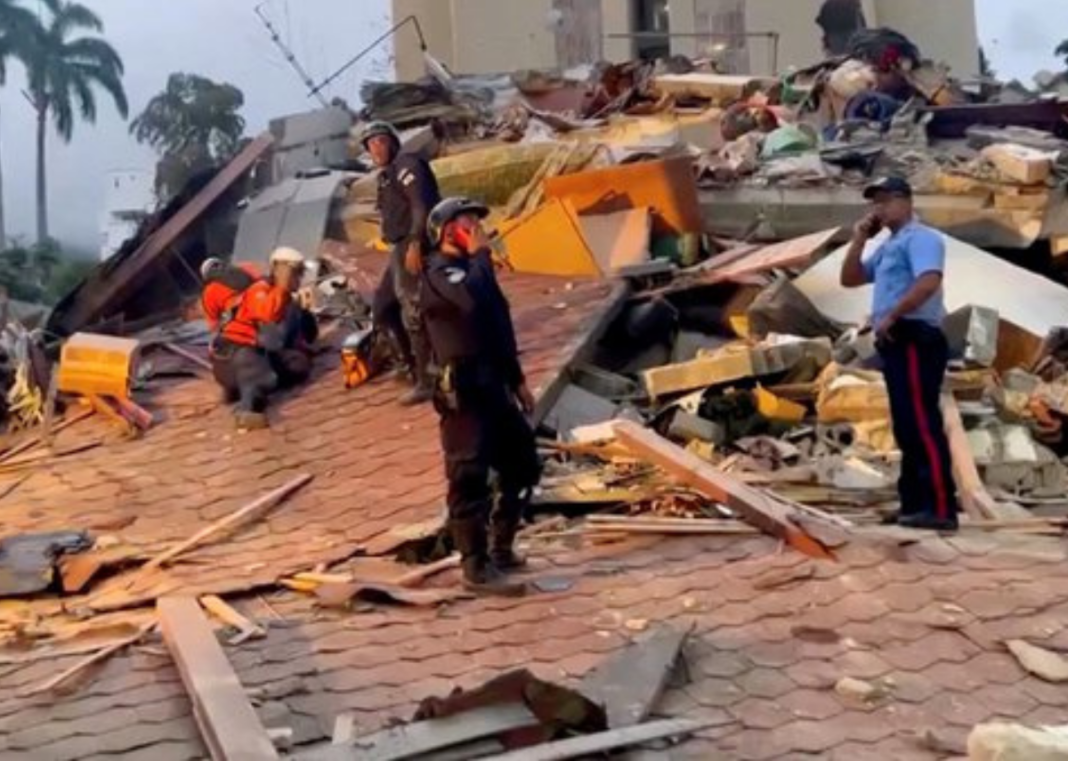
Many Venezuelans were at home when the quakes struck during a public holiday marking an 1821 military victory that helped secure the country’s independence from Spain. The tremors drove residents into the streets across Caracas, a city of more than 2 million people. Fire trucks were seen across the city, where some buildings suffered significant facade damage. mofamofa
At Caracas’ Hospital de Clinicas, staff were asked to double up on the night shift to help treat the injured, according to a hospital worker. Video filmed at the hospital showed a darkened hallway with ceiling panels hanging by cables and plaster scattered across the floor. Residents also reported collapsed buildings in La Guaira, a coastal city near Caracas, and significant damage was visible at Venezuela’s main international airport, though Reuters said it could not immediately verify footage from those locations. mofamofa
Residents described scenes of panic. Astrid Ramirez, a 41-year-old publicist in western Caracas, said: “As soon as it started, we began hearing people screaming. Everyone was running down the stairs.” Maria Romero, an 80-year-old pensioner in southern Caracas who said police helped her evacuate her home, told reporters: “This earthquake was horrible, even worse than the one in 1967.” mofamofa
Government Response
Acting Venezuelan President Delcy Rodríguez declared a state of emergency, and hundreds of emergency workers have been deployed to search for and rescue victims trapped in damaged structures. Interior Minister Diosdado Cabello said the quake could be felt across several states and described “alarming situations” in Caracas’s Altamira neighbourhood, where homes and buildings collapsed. “We understand that some people may be desperate, but we are acting according to protocols to activate aid and rescue efforts to help those who need it most,” Cabello said on state television, urging people to remain outside as aftershocks could further damage already weakened structures. mofamofa
Some municipalities in Caracas cancelled classes and local events through Monday as authorities began assessing the scale of the damage. mofa
No Confirmed Damage to Oil Infrastructure, but Concerns Remain
Authorities have not yet published official estimates of the number of dead or injured beyond initial figures, and there were no official reports of damage to the country’s oil infrastructure. However, social media footage circulating after the quake appeared to show damage at one of Venezuela’s key petrochemical plants, in the Carabobo region — footage that has not been independently verified. mofa
A Political Backdrop of Transition
Interim President Delcy Rodríguez has been running the country since the US ouster of President Nicolás Maduro in January, and has presided over what she has described as a new era of cooperation with the United States and other countries, particularly on oil, mining, and other industries. Just one day before the deadly quakes struck, US President Donald Trump told a rally in Pennsylvania that Venezuela was “doing great,” saying: “We’re getting along great. The people running it, they’re our people, they’re great people. And the people are happy in the country. They have smiles. They were miserable, they were starving.” Trump also said the United States had “paid for the cost of the war 28 times already” by extracting millions of barrels of Venezuelan oil, adding: “Now we’re making a lot of money with Venezuela and Venezuela is doing great.” mofa + 2
Trump’s characterisation was already a departure from conditions on the ground, where Venezuela’s roughly 28 million people have continued to struggle with high inflation, low wages, censorship, and a deep humanitarian crisis. The earthquake disaster is widely expected to compound those existing pressures on the country’s economy and political transition. mofa
The US Embassy’s Response
The US embassy in Caracas said it was closely monitoring the aftermath of the earthquake and urged American citizens in the country to seek secure shelter and avoid damaged areas. mofa
Regional and Global Impact
The earthquake strikes Venezuela at an especially fragile political moment, just months into a transitional government that came to power following the US-led removal of Maduro and amid efforts to rebuild international economic ties, particularly with Washington around oil and mining. A disaster of this scale risks straining a government still establishing its administrative footing and credibility, both domestically and with the international community whose cooperation Rodríguez has actively courted since January.
The scale of damage to Caracas, a densely populated capital with ageing infrastructure, raises the prospect that Venezuela may require international humanitarian assistance to manage the disaster response — a request that would carry political significance given the country’s recent history of strained and, at times, hostile relations with Western governments and humanitarian organisations under the previous government.
Background
Caracas was previously struck by a deadly magnitude 6.3 earthquake in 1967, an event residents continue to use as the benchmark for comparison when describing the severity of subsequent tremors. Venezuela sits along a tectonically active boundary between the Caribbean and South American plates, making the country historically prone to significant seismic activity, although earthquakes of the magnitude recorded on June 24 are rare. Nicolás Maduro was removed from power by the United States in January 2026, ending more than a decade of rule that had been marked by economic collapse, mass emigration, and international sanctions. Delcy Rodríguez, who served in senior roles under Maduro including as vice president, has led the country in a transitional capacity since his removal and has pursued renewed economic cooperation with the United States, particularly in the oil and mining sectors. mofa
What Happens Next
Venezuelan emergency services are continuing search-and-rescue operations across Caracas and the surrounding region, with officials warning that aftershocks could pose further risks to already damaged structures. Authorities are expected to release updated and more complete casualty figures in the coming days as the full scope of the disaster becomes clearer. The state of emergency declared by acting President Rodríguez is expected to remain in effect as the government coordinates relief efforts, with international observers watching closely for any request for outside humanitarian assistance and for indications of how the disaster will affect Venezuela’s broader economic and political trajectory under the transitional government.