
Canada’s Defence Minister Discusses GCAP Fighter Programme With Japanese Counterpart in Tokyo
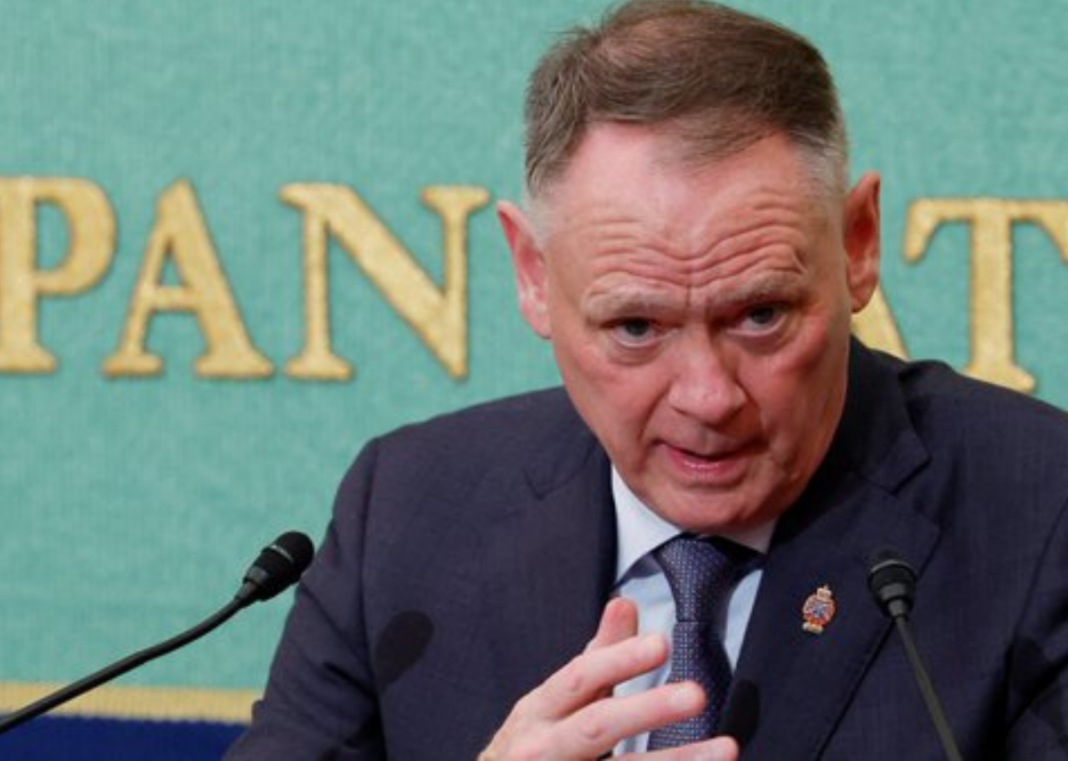
Canadian Defence Minister David McGuinty said on Thursday, June 25, that he had discussed the advanced fighter jet programme being pursued by Japan, Britain, and Italy with his Japanese counterpart, describing the trilateral effort as a “promising initiative.” The remarks, made in Tokyo, mark the latest step in Canada’s months-long effort to formalise a role in the programme. mofa
The three countries launched the Global Combat Air Programme (GCAP) in 2022 to field a next-generation stealth fighter by 2035, led by Britain’s BAE Systems, Japan’s Mitsubishi Heavy Industries, and Italy’s Leonardo. Canada’s potential interest comes as the programme attracts attention from other potential new partners and as a rival European fighter project has collapsed. Any Canadian involvement would mark GCAP’s first expansion beyond its three founding members. mofamofa
A Diplomatic Track Months in the Making
Thursday’s discussion follows a series of bilateral engagements between Ottawa and Tokyo. Japan, Britain, and Italy have been considering plans to include Canada as an observer in GCAP, a status that would grant Ottawa controlled access to classified programme data, enhancing its ability to assess next-generation air combat capabilities without entering full development, while expanding the programme’s potential export base. LBC
Documents obtained through Canada’s open-data catalogue show the Department of National Defence asked Defence Minister David McGuinty’s deputy to sign off on a submission titled “Seeking minister of national defence support to join the Global Combat Air Programme” in January 2026. A meeting took place on March 6 in Tokyo between Japanese Defence Minister Shinjiro Koizumi and McGuinty, which followed the signing of a Canada-Japan defence equipment and technology transfer agreement earlier that month. The Japan Timesmofa
McGuinty has been candid about Ottawa’s deliberations. “It’s something that we’re examining,” he told The Logic in April. “It’s a possibility. We’re considering it.” McGuinty said he had discussed the prospect of joining GCAP with Japanese officials and was keen to discuss it with Britain’s defence minister as well. mofa
What Observer Status Would and Would Not Mean
Observer status is not a procurement commitment. It gives Canada access to programme information from the three core partners — technical, industrial, and developmental — allowing Ottawa to evaluate deeper involvement later, which could include manufacturing, procurement, or eventually joining the development phase. Observer status confers no voting rights or formal participation in programme governance and imposes no funding obligations on the observer nation. The Japan TimesInvesting.com
Canada would become the programme’s first non-founding observer nation and the first non-European, non-Japanese partner, reflecting GCAP’s positioning as a transregional programme bridging the Euro-Atlantic and Indo-Pacific security spheres. Ottawa has been sending formal letters to London, Rome, and Tokyo requesting that status. Investing.comThe Japan Times
The United Kingdom has signalled openness to the move. Megan Lalonde, a spokesperson for the British High Commission in Ottawa, said: “Together with Japan and Italy, we remain open to other partners joining the Global Combat Air Programme, while keeping on track with the programme schedule and delivering our future military capabilities.” mofa
The F-35 Backdrop
The timing is directly tied to deteriorating US-Canada relations. Prime Minister Mark Carney placed Canada’s existing F-35A acquisition under review in March 2025 following escalating tensions with the Trump administration. Canada has contracted for an initial 16 F-35As, with deliveries to US-based training units expected in late 2026 and operational arrivals in Canada around 2028, but the remaining jets from an 88-aircraft programme remain under political review. The Japan Times
Researcher Salt, cited by The Logic, said joining GCAP could make strategic sense for Canada even independent of any eventual aircraft purchase, in the same way Canada signed up for the multinational programme that produced the F-35 long before deciding to buy any aircraft from it. “There’s a strong benefit to being involved in the R&D, the science, the engineering of it,” he said. mofa
A Crowded Field of Prospective Partners
Canada is far from alone in circling the programme. Officials in Rome and executives at Leonardo have floated Canada, Saudi Arabia, and Germany as potential future partners or observers. Any expansion of GCAP would require the agreement of its three founding members. Poland’s Deputy State Assets Minister Konrad Gołota announced in March that Warsaw is exploring membership to rebuild its dormant combat aircraft manufacturing base, while India’s Ministry of Defence has told a parliamentary committee that the Indian Air Force is evaluating both GCAP and the rival Franco-German-Spanish FCAS programme as sixth-generation options. mofaThe Japan Times
GCAP is one of two major Western sixth-generation fighter projects, alongside the US Air Force’s Next Generation Air Dominance programme. A rival European effort, the Future Combat Air System, which was being developed by France, Germany, and Spain, has collapsed amid a dispute between Airbus and Dassault Aviation. mofa
Programme Status
A flight demonstrator for the GCAP airframe is targeted for first flight in 2027, with initial operational capability set for 2035. On April 1, 2026, the GCAP International Government Organisation awarded a £686 million contract to Edgewing — the trilateral joint venture formed by BAE Systems, Leonardo, and Japan Aircraft Industrial Enhancement Co. — to lead design and engineering work through June 30, 2026. The award had been intended for late 2025 but was set back by delays in the publication of the UK’s Defence Investment Plan, and the short contract window reflects ongoing uncertainty around long-term UK funding for the programme. The Japan TimesThe Japan Times
Regional and Global Impact
Canada’s overture to GCAP signals a broader recalibration of its defence procurement strategy away from near-total dependence on US suppliers, a shift driven by political friction with Washington under the Trump administration rather than by any operational shortcoming in existing American platforms. Canadian defence companies that already manufacture F-35 components stand to benefit from similar economic and industrial opportunities tied to GCAP, even under a limited observer arrangement, while Canadian involvement — however preliminary — enhances interoperability prospects between the Royal Canadian Air Force and allied air forces in Europe and the Indo-Pacific. The Japan Times
For Japan, Britain, and Italy, expanding GCAP’s circle of partners brings both opportunities and risks. Additional partner nations would help distribute development costs across a broader industrial base at a time when the UK has yet to provide a full long-term budget commitment to the programme. However, Japan has taken a comparatively restrictive position on adding new development partners, given concerns about preserving the 2035 deployment target and information security. The Japan TimesInvesting.com
Background
The Global Combat Air Programme, launched in December 2022, brings together Britain, Italy, and Japan to jointly develop a sixth-generation stealth fighter intended to succeed each country’s current fleets. The programme reflects an unusual alliance bridging European and Indo-Pacific defence industrial bases, distinguishing it from earlier multinational fighter programmes that were confined to single regions. Canada’s engagement with GCAP follows a broader pattern of Ottawa reassessing its reliance on US defence suppliers since the start of renewed trade and security tensions with Washington in 2025. Canada and Japan signed a bilateral defence equipment and technology transfer agreement in January 2026, providing the legal framework underpinning the kind of cooperation McGuinty discussed in Tokyo on Thursday.
What Happens Next
A formal announcement on Canada’s observer status in GCAP is expected at a defence ministers’ meeting hosted by the United Kingdom, anticipated for June or July 2026. McGuinty is expected to continue discussions with his British counterpart following his engagement with Japanese officials in Tokyo. Canada’s eventual decision on whether to pursue deeper involvement in GCAP, including potential procurement, is likely to remain contingent on the outcome of its ongoing review of the existing F-35A programme and on the broader trajectory of US-Canada defence and trade relations. The Japan Times