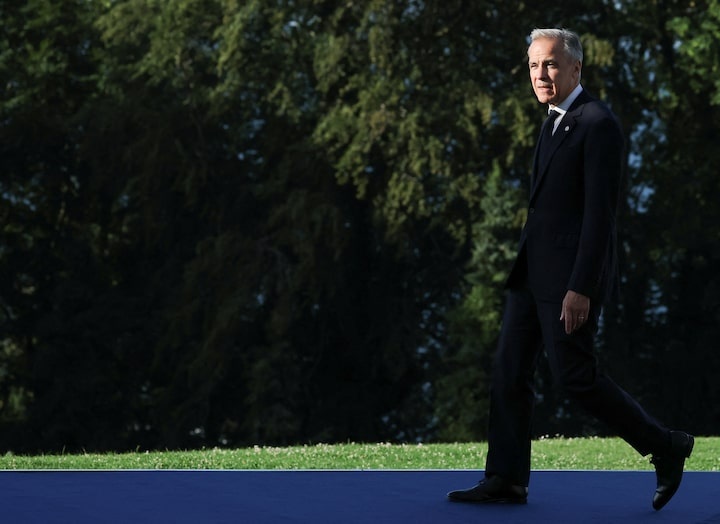

Luxembourg will serve as the European headquarters of a new multilateral defence bank, Canadian Prime Minister Mark Carney told reporters on Friday. The institution, called the Defence, Security and Resilience Bank, will be globally headquartered in Canada, with five Canadian cities currently competing to host the main office. The bank aims to raise $135 billion to finance defence projects in member countries.
“There is a critical mass of countries that intend to join,” Carney said, according to the Globe and Mail. “Canada is one of them, and we will be the headquarters, Luxembourg is the European headquarters,” he added.
The announcement builds on months of planning between Ottawa and partner governments. Canada’s finance ministry said in April that the country had been working with allies in Montreal to agree on a founding charter for the bank, though the other participating countries were not identified at the time.
The bank’s core function is financial. It is designed to let small and medium-sized defence firms meet rising demand for weapons and military equipment, a surge that has accelerated since the war in Ukraine began. Canadian officials argue that existing financing mechanisms, including a European Union loan program, have not gone far enough to address the gap.
Carney also said he intends to raise the project with the United Kingdom’s new prime minister. He told reporters he looks forward to discussing the bank with the incoming U.K. leader.
The bank was not Carney’s idea alone. According to the Cascade Institute, a policy research group, the concept was developed by Rob Murray, a former head of innovation at NATO, who began working on the proposal in 2018. The Cascade Institute said the bank launched formally last year and is now backed by major global banks helping to structure the institution, with organizers aiming for it to be operational by the end of 2026.
The structure works through pooled credit rather than direct grants. Under the plan described by the Cascade Institute, the bank would issue AAA-rated bonds on global capital markets, then lend to member governments and guarantee loans made to defense firms by commercial banks, allowing borrowing at rates most NATO members cannot secure individually and over time frames longer than typical defense financing allows.
Luxembourg’s role was foreshadowed earlier this year. Canada’s Prime Minister’s Office said in April that Carney spoke by phone with Luxembourg Prime Minister Luc Frieden, building on a visit Frieden made to Canada in February, and that the two discussed progress on establishing what officials referred to as the DSR Bank. The Canadian government described the bank as a vehicle to mobilize private capital to scale up defence industries and bolster collective security.
Carney and Frieden have also pushed the idea publicly together. Canada’s National Observer reported that the two leaders published a joint opinion piece in the Financial Times this week urging allies to “rally around a defence bank” that would pool capital to support the defence sector.
Not every NATO member is on board. Politico reported on Thursday that the United Kingdom is expected to resist calls to join the bank, which could be formally launched at the upcoming NATO summit, according to Canada’s National Observer. Germany has separately indicated a preference for the European Union’s existing Security Action for Europe program, known as SAFE, although the Cascade Institute noted that one of the bank’s partner institutions is Deutsche Bank, a German lender.
Regional and global impact
For Canada, the announcement extends a project Carney has championed since taking office, after Radio-Canada sources told CBC News in April that Canada had been selected to headquarter the bank, with the Globe and Mail first reporting the story. Five Canadian cities remain in contention to host the global headquarters, according to the Globe and Mail.
For Europe, the choice of Luxembourg gives the bank a physical foothold inside the European Union as the bloc weighs how to finance a defence buildup alongside existing instruments such as the EU’s SAFE program and the European Investment Bank’s expanded defence lending, which the Cascade Institute said quadrupled to €4 billion. Money channeled through the bank would count toward NATO’s spending target, Canada’s National Observer reported.
Background
The bank emerged amid a broader push within NATO to raise defence spending. NATO members have set a target of allocating five percent of GDP to defence by 2035, according to Canada’s National Observer. U.S. Defense Secretary Pete Hegseth has criticized member states over their pace toward that goal, saying some of the alliance’s wealthiest countries still behave as if “the era of free riding is here,” Canada’s National Observer reported. The bank’s backers say it would complement, not replace, programs such as the EU’s SAFE initiative and Readiness 2030 plan, which the Cascade Institute said aims to mobilize €800 billion. Talks on the bank’s charter have involved finance officials and former military and banking figures across several countries since the concept was first developed in 2018.
What happens next
More clarity on which allied governments will formally back the $135 billion fund is expected after next month’s NATO summit, according to News.Az’s report citing Reuters. NATO leaders, including Carney, are due to meet in Ankara on July 7 and 8, Canada’s National Observer reported. Five Canadian cities will continue competing for the bank’s global headquarters in the meantime, according to the Globe and Mail. Carney has said he plans to discuss the bank directly with the United Kingdom’s new prime minister, though no date for that meeting has been set.