

Hungarian Prime Minister Peter Magyar said on Monday that his government will initiate the removal of President Tamas Sulyok from office through a constitutional amendment, according to Reuters. Magyar made the announcement in a speech to parliament in Budapest. He also said a broader constitutional reform would be launched in the fall, Reuters reported.
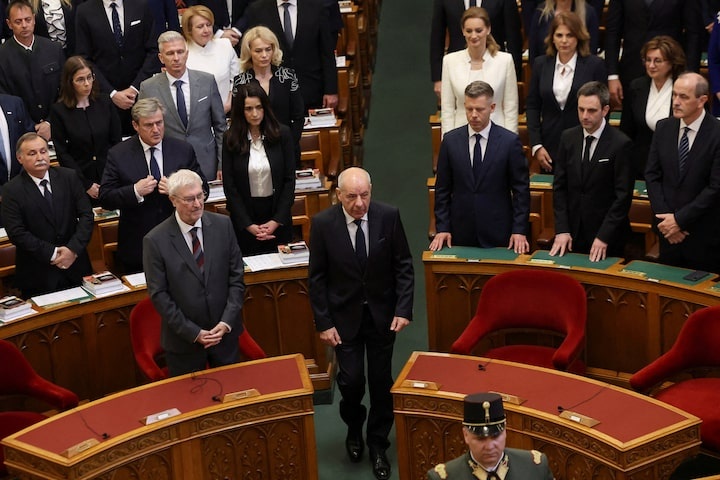
Magyar told lawmakers his government would pursue wide-ranging economic, political and legal measures aimed at fighting corruption. Among them is the creation of a National Asset Protection and Recovery Office, according to Reuters.
The move follows weeks of public pressure on Sulyok to leave office voluntarily. Magyar had set a May 31 deadline for the president to resign, repeatedly referring to him as “Orban’s puppet,” according to the Associated Press. Sulyok refused to step down and instead sought a legal opinion from the Venice Commission, a panel of legal experts under the Council of Europe, the AP reported.
Speaking at a press conference outside Sandor Palace in early June, Magyar laid out his case against the president directly. “Hungary does not belong to Tamas Sulyok, nor to Viktor Orban. It doesn’t belong to a single party or political system,” he said, according to the AP. “The constitution states quite clearly that the president showcases the unity of the nation and guards the democratic functioning of the state.”
Magyar accused Sulyok of failing to act when former Prime Minister Viktor Orban made dehumanizing remarks about political opponents and critics, and when the previous government passed legislation banning LGBTQ+ Pride events, the AP reported. “It is in Hungary’s interest that this institution — the office of the president — regain the prestige that has been eroded by its silence and inaction,” Magyar said, according to the AP.
Sulyok, who was appointed under Orban’s Fidesz party, has maintained he will not resign on his own. In a Facebook video reported by Euronews, he said he wanted to keep cooperating with the government on legislation needed to draw down European Union funds, and that he would wait for the Venice Commission’s opinion before any further steps. He also said the new government must proceed through constitutional means, according to Euronews.
Sulyok’s office issued a statement saying Magyar’s public calls for his resignation “adversely affect both the constitutional functioning and the authority of the institution of the President of the Republic,” the AP reported.
The dispute has drawn a response from Orban’s Fidesz party. Gergely Gulyas, the party’s parliamentary caucus leader, said in a video posted to Facebook that removing a sitting president outside normal constitutional procedure is not something a constitutional democracy permits, according to the AP.
Regional and global impact
Magyar and his Tisza party won a decisive victory in Hungary’s April election, securing a two-thirds majority in parliament, according to the AP. That majority gives the government the power to amend the constitution without support from other parties, the AP reported. The AP noted the outcome could carry implications beyond Hungary’s borders given Orban’s role as a vocal ally of Russia and a frequent obstacle to unified EU positions on issues including aid to Ukraine. The Hungarian president’s role is largely ceremonial but carries the power to sign legislation into law and to refer parliamentary bills to the constitutional court for review, according to the AP and Al Jazeera.
Background
Orban governed Hungary for 16 years before his April 2026 election defeat, during which time he built a political system that critics describe as autocratic, according to the AP. Sulyok was appointed president under Orban’s Fidesz party. Magyar, a former Fidesz insider, founded the Tisza party and led it to its parliamentary majority in April. The presidency in Hungary is filled through election by parliament rather than direct popular vote, according to Euronews. Magyar has said any constitutional amendment would not be written to target Sulyok alone but would establish a general framework that could also apply to other state leaders, according to Euronews.
What happens next
Magyar said in his Monday parliamentary speech that the procedure to remove Sulyok will move forward through a constitutional amendment, with a broader constitutional reform planned for the fall, according to Reuters. The government has not specified the exact legal mechanism it will use to remove the president, according to multiple reports. Sulyok has said he will wait for the Venice Commission’s assessment before deciding his next move, according to Euronews. The National Asset Protection and Recovery Office announced by Magyar has not yet been formally established, according to Reuters.