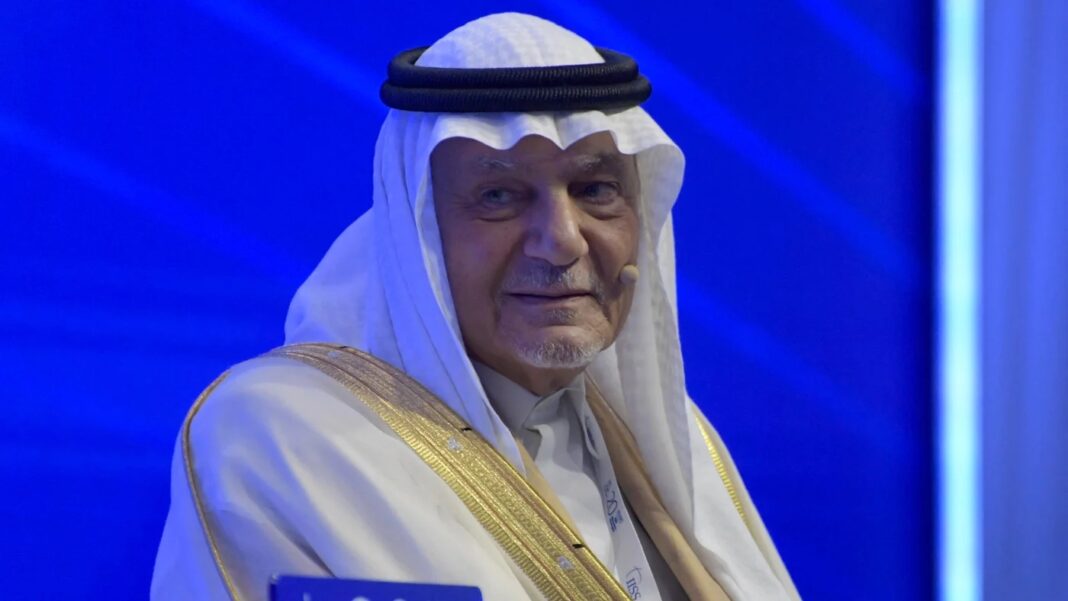

Prince Turki Al-Faisal, the former head of Saudi Arabia’s intelligence service, stated that Riyadh intentionally avoided becoming involved in what he characterized as an Israeli effort to provoke a direct conflict between Saudi Arabia and Iran. Writing in Arab News on Saturday, May 9, the senior royal said that had Riyadh taken the bait, the region would have been left in ruin. The statement represents one of the most direct public critiques of Israel’s wartime strategy to emerge from within the Saudi royal family since the US-Israeli war on Iran began on February 28.
“Had the Israeli plan to ignite war between us and Iran succeeded, the region would have been plunged into ruin and destruction,” Prince Turki wrote. “Thousands of our sons and daughters would have been lost in a battle in which we had no stake. Israel would have succeeded in imposing its will on the region and remained the only actor in our surroundings.”
The article, which first appeared in the pan-Arab daily Asharq Al-Awsat before being republished by Arab News, was framed as a rebuttal to criticism from Western and regional commentators who questioned Saudi Arabia’s conduct since the war began.
Riyadh’s Deliberate Restraint
Prince Turki argued that Saudi Arabia, under the leadership of Crown Prince Mohammed bin Salman, had worked to resolve the conflict “without noise, theatrics, grandstanding, or bluster,” choosing instead to pursue diplomacy while enduring direct damage to its infrastructure.
He acknowledged that Riyadh had the capability to strike back at Iran in kind, but said doing so would have led to the destruction of Saudi oil facilities and desalination plants along the Arabian Gulf coast and deep inside the kingdom. The restraint, Prince Turki wrote, was a calculated choice — not a sign of weakness.
“When Iran and others tried to drag the Kingdom into the furnace of destruction, our leadership chose to endure the pains caused by a neighbor in order to protect the lives and property of its citizens,” he said.
Oil Infrastructure Hit Hard
Saudi Arabia has not come through the conflict without enduring considerable repercussions of its own. Iranian attacks on Saudi Arabia’s East-West pipeline knocked out 700,000 barrels per day of the kingdom’s oil capacity — roughly 10 percent of its current exports. The pipeline connects Saudi Arabia’s Gulf coast to the port of Yanbu on the Red Sea, providing a route that bypasses the Strait of Hormuz.
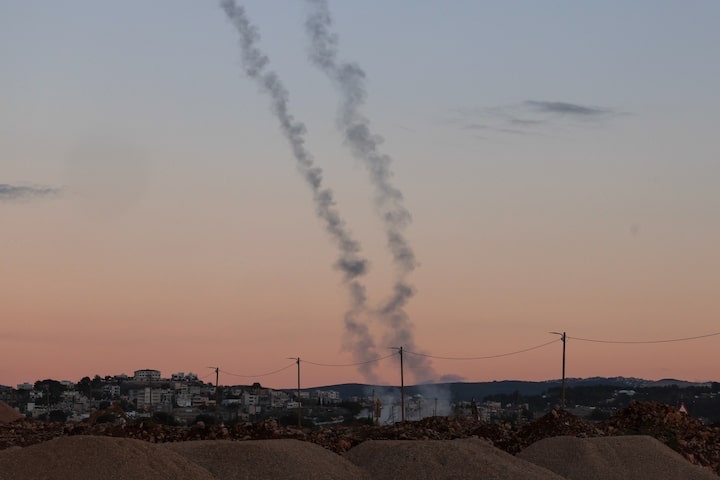
Refining facilities in Jubail, Ras Tanura, Yanbu, and Riyadh were also struck, directly affecting exports of refined products to global markets. Iran’s effective closure of the Strait of Hormuz — through which approximately one fifth of the world’s crude oil passes — has compounded the kingdom’s economic exposure.
Saudi-Pakistan Coordination
Prince Turki said that Saudi Arabia is now working alongside Pakistan to prevent further escalation. That coordination tracks with broader diplomatic moves already under way. According to Al Jazeera, Saudi Arabia convened an emergency meeting of foreign ministers from 12 Arab and Islamic countries in Riyadh, which Pakistan attended. That meeting produced a joint statement and, on the sidelines, a separate coordination session between the foreign ministers of Pakistan, Saudi Arabia, Egypt, and Turkey — the first in that format.
Prince Turki wrote that together with Pakistan, Saudi Arabia is now “extinguishing the fire of fighting, helping prevent escalation, and giving advocates of peace hope.”
He also addressed critics directly. “As for the advocates of war, they continue in their arrogance and cawing, perhaps unaware that the rug has been pulled from under their feet,” he wrote.
Regional and Global Impact
The op-ed carries significant diplomatic weight coming from a member of the royal family with Prince Turki’s biography. He served as head of Saudi intelligence for more than two decades and later served as the kingdom’s ambassador to the United States. Writing under his own name in a Saudi-owned publication, his remarks carry the implicit endorsement of the establishment — even if they technically represent a personal view.
By going on the record to state that the US and Israel tried to drag Saudi Arabia into a war for their own benefit, the Saudi establishment is signalling a shift toward a more independent foreign policy posture. The kingdom’s denial of US access to its bases and airspace during the conflict, reported separately, fits that picture.
For Gulf neighbours, the message was conciliatory. Prince Turki wrote that Crown Prince Mohammed bin Salman had “supported and stood in solidarity with all Gulf leaders” and placed the kingdom’s trade and logistics routes — roads, airports, and ports — at the service of neighbouring states and their populations.
Background
The US-Israeli military campaign against Iran began on February 28, according to Middle East Eye. Iran retaliated by striking every Gulf state hosting US military bases, including Saudi Arabia. The Strait of Hormuz closure has disrupted global energy markets and supply chains far beyond the region. Saudi Arabia had previously worked to normalise relations with Iran through a China-brokered deal in 2023, a process now under severe strain. Prince Turki led Saudi Arabia’s intelligence service for over two decades and is the son of the late King Faisal, who ruled the kingdom from 1964 to 1975. Pakistan’s emergence as a potential neutral venue for US-Iran talks stems from the Saudi-convened diplomatic meetings held in Riyadh in recent weeks, Al Jazeera reported.
What Happens Next
According to Prince Turki’s account, it has stated that Saudi Arabia and Pakistan are engaged in active diplomatic coordination aimed at de-escalation. Pakistan has signalled readiness to host direct talks between the US and Iran, Al Jazeera reported. Saudi Arabia has stated its support for a ceasefire and peace negotiations, with the kingdom’s foreign minister having warned that Riyadh’s patience is not unlimited. No formal timeline for any negotiations has been announced. The war’s trajectory will be shaped in part by the outcome of the Trump-Xi summit in Beijing this week, where Iran is expected to dominate the agenda.