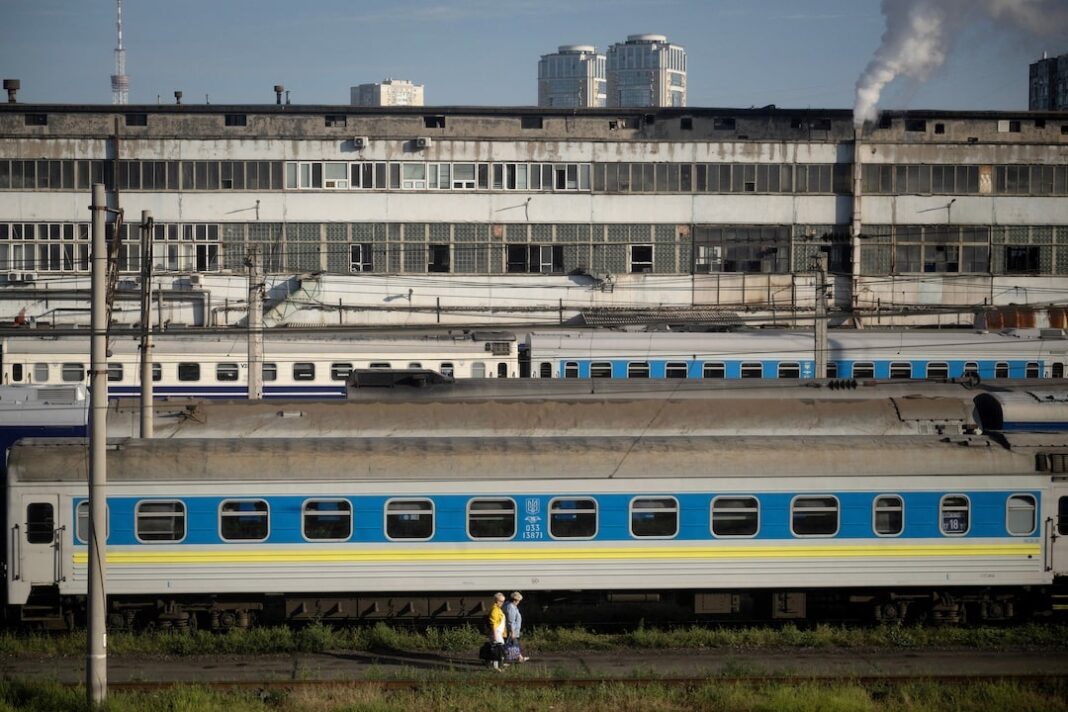

Ukraine’s economy ministry proposed raising freight tariffs on state railway operator Ukrzaliznytsia by 30% starting August 1, according to Reuters, which reported the increase is intended to help stabilize the company’s financial position. The ministry outlined the plan in a note issued over the weekend, ahead of June 22. Steelmakers and agricultural producers have already objected, warning the higher costs will hurt their ability to compete abroad.
The proposed increase is expected to generate roughly 8.6 billion hryvnias, or about $192 million, in additional revenue for Ukrzaliznytsia. That sum would partly cover the company’s projected funding shortfall for 2026. The ministry has the authority to implement the tariff hike on its own but said it will first consult with affected industries.
Ukrzaliznytsia, the sole rail operator in Ukraine, plays a key role in wartime logistics, transporting both freight and passengers. The company described the 30% increase as a “compromise” measure, a characterization that points to a steeper request the railway had originally sought.
That steeper figure came directly from the company’s top executive. Oleksandr Pertsovskyi, CEO of Ukrainian railways, told Reuters in an interview on June 3 that “45% is not enough, because we have a significant gap, but we understand this is a compromise solution that allows us at least to hold out.” Pertsovskyi has said an increase of 45% would cover about half of the company’s projected $587 million cash shortfall.
The economy ministry’s note did not say whether tariffs could rise further to reach that 45% threshold. Ukrzaliznytsia said a decision on any additional tariff increase from January 1 would be made separately. Industry sources cited by IndexBox said the railway is planning a further 15% increase from January 1, 2027, which combined with the August rise would amount to a 45% total hike generating an estimated 26 billion hryvnias.
Industry representatives have pushed back hard against the plan. At a press conference in Kyiv organized by national business associations, Volodymyr Husak, director general of the Federation of Transport Employers of Ukraine, said the company is pursuing back-to-back increases. “This is yet another attempt by Ukrzaliznytsia to increase freight tariffs: by 30% as early as August 2026 and by another 15% from January 2027,” Husak said, according to Interfax-Ukraine. He argued that a moratorium on tariff hikes should be introduced until the war with Russia ends.
Kostiantyn Saliy, president of the Ukrainian Union of Building Materials Manufacturers, warned the size of the increase would ripple through the wider economy. “In the EU, price increases of 2-3% trigger significant public dissatisfaction. Here we are talking about an immediate 30% increase. This will create a chain reaction in prices. First we will feel it, and then consumers will,” Saliy said.
Why Ukrzaliznytsia says it needs the money
The railway’s finances have deteriorated on multiple fronts at once. Russian strikes on the company’s infrastructure intensified through 2026, with Pertsovskyi describing the rise in attacks as “just crazy” and pointing to a shift toward targeting locomotives, of which the company owns more than 100. Freight volumes have also fallen sharply: by the end of 2025, freight volumes had dropped 7.8% year-on-year to 161.3 million tonnes, according to IndexBox, with revenue from that segment down 19% over the same period. The decline continued into 2026, with first-quarter freight volumes down a further 6.4% year-on-year.
The freight side of Ukrzaliznytsia’s business has traditionally subsidized loss-making passenger operations, but freight itself risks becoming unprofitable in 2026 for the first time. Iryna Kosse, a research fellow at the Institute for Economic Research and Policy Consulting, told the Kyiv Independent that the urgency behind this year’s push is new. “This conversation has repeated itself every year, but rising Russian attacks have injected urgency into the matter this year, as well as the deadline for paying Eurobonds in July,” Kosse said.
Impact on exporters and the broader economy
Steel and agricultural groups argue the increase threatens sectors that are central to Ukraine’s wartime export earnings. Key Ukrainian sectors, including agriculture and metallurgy, have said the tariff rise would create a significant competitive disadvantage for Ukrainian exporters at a time when the country needs to preserve industrial output, exports, jobs, and foreign currency revenues. Some industry estimates suggest individual steel producers could face millions of dollars in added annual transport costs, with companies warning that higher rail tariffs are already pushing cargo onto roads instead.
Background
Ukrzaliznytsia last raised freight tariffs in 2022, when rates for some goods jumped by as much as 140%. The company has since pursued several proposals to raise tariffs again, including a 37% indexation plan discussed in late 2024 and 2025 that was not approved. Ukraine’s war with Russia is now in its fifth year, and the conflict has driven up both security and infrastructure maintenance costs for the state-owned carrier. The government has separately provided billions of hryvnias in support to Ukrzaliznytsia to keep it operating, but the company says this has not resolved its underlying funding gap. Ukraine is simultaneously negotiating a broader restructuring of its government debt, adding pressure on state finances overall.
What happens next
Ukrainian Prime Minister Yulia Svyrydenko told parliament that negotiations between Ukrzaliznytsia and business representatives over the tariff increase are ongoing. The economy ministry said it will consult with industry groups before the August 1 implementation date, though it retains the authority to enforce the increase without their agreement. A separate decision on whether tariffs will rise again from January 1, 2027, will be made independently of the current proposal, according to Ukrzaliznytsia. Industry associations have indicated they plan to send formal appeals to government ministries and international partners, including the European Commission, seeking financial support for the railway instead of further tariff increases.