

Iran has agreed to allow International Atomic Energy Agency inspectors back into the country for the first time since July 2025, US Vice President JD Vance announced on Sunday. The agreement followed a day of negotiations between American and Iranian delegations in Bürgenstock, Switzerland. Vance said the talks also produced a communication mechanism to keep the Strait of Hormuz open and a separate channel to manage flare-ups in Lebanon.
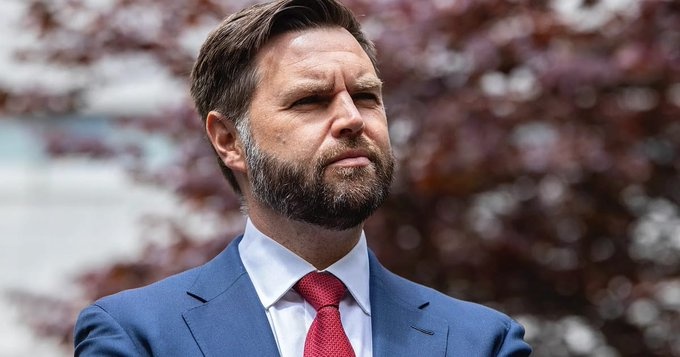
“Yesterday was a very, very good day. We made a lot of good progress. We did exactly what we wanted to do,” Vance said, according to Clash Report.
The talks were mediated by Qatar and Pakistan and brought together a US delegation led by Vance with an Iranian team headed by chief negotiator Mohammad Bagher Ghalibaf, Clash Report reported. The two sides agreed to a 60-day roadmap aimed at producing a final, comprehensive nuclear deal. Technical-level talks are expected to continue through the rest of the week at the same Swiss resort, even after Vance returns to Washington.
“I can’t stay here for the next 60 days. The technical teams will be working,” Vance said.
On the Strait of Hormuz, Vance described the new arrangement as a direct test of whether the diplomatic process could hold up under pressure. “We wanted to build a mechanism for keeping the Strait of Hormuz open. It is open,” he said. Iran had closed the waterway following joint US and Israeli strikes on February 28, according to Clash Report, before reopening it under a preliminary framework that nearly collapsed again amid renewed fighting in Lebanon.
The Switzerland round did not start smoothly. Iranian negotiators briefly signaled they might leave the talks after President Donald Trump warned of military action if Tehran did not rein in its regional proxies in Lebanon, Clash Report reported. Ghalibaf rejected the warning and said Iranian armed forces were ready to respond to any hostile move. Vance downplayed the episode by Sunday.
“The Iranians did threaten to walk out, or at least there were social media threats that they would walk out. They didn’t walk out,” he said.
Vance also addressed the public sparring between Trump and Iranian officials that has accompanied the negotiations. “We told the Iranians yesterday: when you guys engage in what us millennials might call trash talk, you can’t expect Trump not to respond. When they say things that aren’t true, Trump is going to respond to it,” he said.
Lebanon remains the most fragile piece of the agreement. A new de-confliction cell, facilitated by Qatari and Pakistani mediators, is intended to operate as a liaison between Lebanese authorities and the negotiating parties to enforce a ceasefire between Israel and Hezbollah, according to Clash Report. Vance described the past 24 hours in Lebanon as the calmest stretch of the conflict so far, while acknowledging it remained unsettled. “Over the past 24 hours, it’s probably been the most peaceful the situation in Lebanon has been. The previous 24 hours were pretty good. Obviously, there was some shooting 72 hours ago. This is a work in progress,” he said.
He attributed some ceasefire violations to unauthorized action by individual fighters rather than a breakdown of the agreement itself. “Sometimes a junior guy fires a drone that didn’t have approval from the high command. Of course, Israel has to respond to that, but we could have a more peaceful situation if Israel responds in the context of the conversation that is ongoing between Hezbollah, Lebanon, Israel, and other partners in the region,” Vance said.
Asked whether Washington wants Israeli forces to withdraw from southern Lebanon, Vance said Israel has indicated it has no territorial ambitions there but remains concerned about Hezbollah’s presence. “The Israelis have been very clear that they don’t have territorial intentions in southern Lebanon. The reason they feel they have to be there is because they are worried about Hezbollah fighters in southern Lebanon. We believe we can get to a place where both Lebanon’s territorial integrity and Israel’s security are protected,” he said. That position contrasts with comments earlier in the week from Israeli National Security Minister Itamar Ben-Gvir, who said Israel had no intention of withdrawing from Lebanon, Clash Report reported.
Iranian Foreign Minister Abbas Araghchi said the mediation had produced major progress toward ending the fighting in Lebanon, according to Clash Report. He said the broader framework includes waivers for Iranian oil and petrochemical exports, the lifting of blockades, the release of frozen Iranian assets, and a reconstruction plan for Iran. Araghchi called the Lebanon de-confliction cell the first real test of whether the agreement can function in practice.
Vance credited Trump adviser Jared Kushner and Qatari officials for designing the financial terms of the arrangement. “What Jared and the Qataris and the entire team accomplished is, to me, a classic Trump deal. If Iranian assets are ever unfrozen, they are going to make American farmers richer and help feed the Iranian people,” he said.
For the region
The Lebanese health ministry has reported more than 4,100 deaths in the conflict between Israel and Hezbollah, according to Clash Report. Israeli Prime Minister Benjamin Netanyahu has said troops will stay in southern Lebanon as long as necessary, while Israeli military chief Lieutenant General Eyal Zamir has said Hezbollah has suffered serious losses. Iranian President Masoud Pezeshkian has said Tehran will not give up its right to enrich uranium, while repeating that Iran does not intend to build a nuclear weapon, Clash Report reported.
Planned talks were postponed last Friday after Israeli strikes in Lebanon killed several people, following the deaths of four Israeli soldiers in combat, according to Clash Report. No new strikes were reported by Sunday evening, and some displaced residents had begun returning to southern Lebanon.
Vance closed his remarks by framing the current arrangement as a managed reduction in violence rather than a full resolution. “As Trump said, sometimes these ceasefires mean you are shooting a little bit less. But we wanted to make sure that we have the proper coordination set up so that if there is shooting — if Hezbollah fires at Israel, or if Israel responds — we are actually talking to each other and figuring out how to stop the shooting,” he said.
What happens next:
Technical teams from both delegations are set to continue talks in Switzerland through the rest of the week. The 60-day window for reaching a final comprehensive nuclear agreement remains in effect, according to Clash Report. The newly created Lebanon de-confliction cell and the Hormuz communication channel are expected to begin operating as the mechanisms through which the US, Iran, and regional mediators manage further incidents during that period.